
UCP Explained: 8,000 Stores Joined Google's AI Shopping Protocol in 5 Months. Should Yours?
Google's Universal Commerce Protocol went from launch to 8,000+ verified stores in five months. How agent checkout works, what it costs versus OpenAI's ACP, and whether your store should adopt it.
Google launched the Universal Commerce Protocol on January 11, 2026. Five months later, more than 8,000 verified stores had adopted it. The protocol lets an AI agent find your products, fill a cart, and pay you, on its own.
Adoption numbers verified July 12, 2026.
What is UCP?
UCP is an open standard that gives AI agents one common language to shop across any online store. Google built it with Shopify, Etsy, Wayfair, Target, and Walmart, and released it as open source so any merchant or platform can use it for free (Google developer blog).
Think of it as a shared grammar for buying. Before UCP, every AI shopping tool needed a custom deal with each retailer. Now a single standard covers the whole journey: finding a product, adding it to a cart, checking out, paying, and handling returns.
That full-journey scope sets UCP apart from OpenAI's rival Agentic Commerce Protocol, which handles only the transaction step (checkout.com comparison). UCP is one layer in a wider set of agent standards. For the full picture, see our agent readiness stack guide.
How does an AI agent actually buy something through UCP?
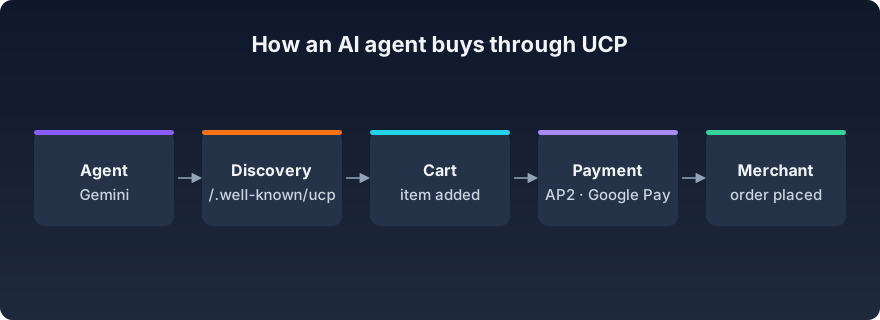
The agent runs four steps: discovery, cart, checkout, and payment. Here is how that looks in practice.
Say you ask Gemini for trail running shoes under $150 with good grip. Gemini reads UCP data from stores that support the protocol. This is discovery. It pulls live product details, prices, and stock straight from each merchant, not from a stale index.
Next comes the cart. Gemini adds a matching pair to a UCP cart. With Google's Universal Cart, you can hold products from several retailers in one place, so shoes from one brand sit next to socks from another (Google Shopping blog).
Then checkout and payment. You confirm, and the agent completes the order. You pay with Google Pay or the retailer's own checkout. Google's separate Agent Payments Protocol, AP2, authorizes the charge. Its April 2026 v0.2.0 release added "Human Not Present" purchases, so an agent can buy when you are away, inside limits you set (Google Cloud blog). Google is donating AP2 to the FIDO Alliance.
The store still gets a normal order. The difference is who placed it: a machine acting for a shopper, not a person clicking through your site.
Who's behind it and who's adopted it?
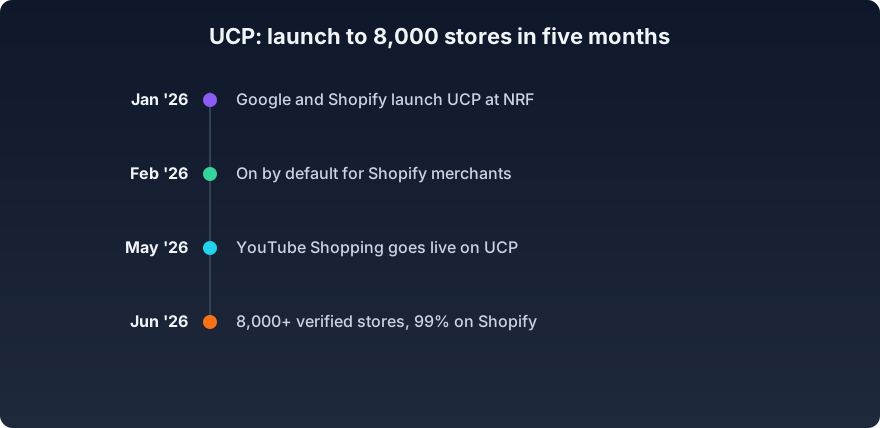
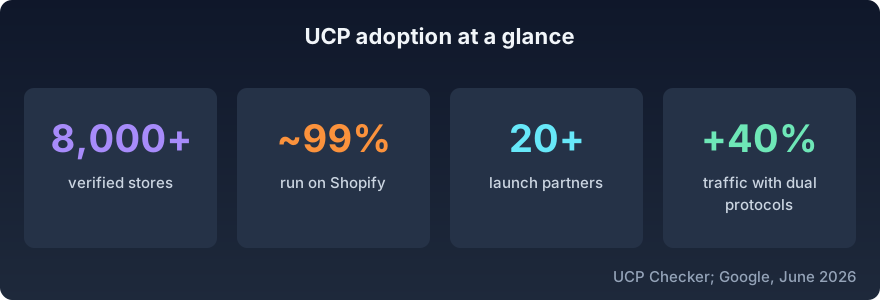
Google unveiled UCP at NRF, the big retail trade show, on January 11, 2026. More than 20 partners backed it at launch, including payment giants Visa, Mastercard, Stripe, and American Express (Search Engine Land).
Adoption moved fast, and one platform did most of the lifting. By mid-June 2026, the independent UCP Checker tracker counted 8,000+ verified stores, and roughly 99% ran on Shopify. Worth sitting with that number: strip out Shopify and adoption elsewhere is still tiny. That is not a coincidence. Shopify turned UCP on by default through "Agentic Storefronts" in its Winter 2026 Edition, so most Shopify merchants got it without lifting a finger (Shopify Engineering).
Merchants on other platforms can join through Google Merchant Center, which launched a simpler setup path with six platform partners. Big names already sell through UCP surfaces: Nike, Sephora, Target, Walmart, and Wayfair, plus Shopify brands like Fenty and Steve Madden.
Where does an agent reach these stores? Three live surfaces today: Google AI Mode, Gemini, and, since May 2026, YouTube Shopping. That last one matters. A viewer can buy from a creator's video without leaving YouTube.
What does it cost vs OpenAI's ACP?
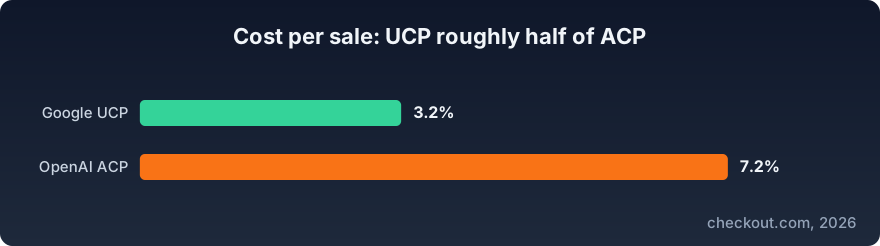
UCP charges no platform fee. You pay only standard payment processing, around 3.2%. OpenAI's ACP costs roughly 7.2% all-in, because OpenAI adds a 4% platform fee on top of Stripe's processing (checkout.com).
That gap changes the math on every sale. On a $100 order, UCP leaves about $96.80 in your pocket. ACP leaves about $92.80. Here is the side-by-side.
FeatureGoogle UCPOpenAI ACPLaunchedJan 2026Sept 2025Cost per sale~3.2% (processing only)~7.2% (incl. 4% platform fee)Journey coveredDiscovery to returnsTransaction stepWhere agents shopAI Mode, Gemini, YouTubeChatGPTOpen sourceYesYesBasic setup timeDefault on Shopify2 to 4 hours
ACP has one thing UCP does not: ChatGPT, live since September 2025. That reach is real. Around 20% of Walmart's referral traffic now comes from ChatGPT.
Which is why the smart merchants run both. A full UCP-versus-ACP decision guide is coming next. For now, the headline is that these two are not either-or.
Should your store adopt UCP?
Yes, for most online stores, and often you already have it. The right move depends on your setup.
If you run on Shopify, you likely already have UCP. Agentic Storefronts turned it on by default in the Winter 2026 Edition. Your job is to confirm it is live, not to build anything. Check, then move on.
If you run on another platform, use the Google Merchant Center path. Setup is simpler than it was at launch, with six platform partners supporting it. This is worth doing if AI shopping traffic could reach your customers.
If you run both UCP and ACP, expect more traffic. Dual-protocol merchants report up to 40% more agentic traffic than single-protocol stores. Walmart runs both: an October 2025 OpenAI deal, plus Gemini and UCP announced at NRF 2026. Two protocols means two front doors, and agents walk through whichever one fits.
If you have a tiny store or no real e-commerce, skip it for now. A brochure site with no products has nothing for a shopping agent to buy. Spend your effort on getting cited in AI answers first.
How do you check if your store is UCP-ready?
Look for a file at /.well-known/ucp on your domain. This manifest is how your store tells AI agents it speaks UCP. It advertises that your site supports the protocol and points agents to the product, cart, and checkout data they need. No manifest, no UCP.
You can check by hand. Add /.well-known/ucp to the end of your store's domain in a browser. If you see structured data, you are advertising UCP. If you get a 404, you are not.
GenReady checks this for you automatically. Our analyzer fetches /.well-known/ucp, validates the manifest, and reports whether AI shopping agents can transact with your store. UCP is a bonus-only signal in our score: detecting it adds a point, and missing it never counts against you. It is a pure upside check.
What to do about it
UCP went from launch to 8,000 stores in five months, backed by Google, Shopify, Visa, and Mastercard. Agents are already buying through it on Gemini, AI Mode, and YouTube. Here is your short list.
Confirm your status first. Shopify merchants: verify Agentic Storefronts is on. Everyone else: check for the /.well-known/ucp manifest.
Add UCP if you sell products and lack it. Use Google Merchant Center if you are off Shopify. The cost is only payment processing, with no platform fee.
Consider running ACP too. If ChatGPT's shoppers are your customers, a second protocol can lift agentic traffic by up to 40%. Weigh the higher fee against the added reach.
Keep your product data clean. Agents buy on accurate prices, stock, and details. Bad data means missed sales, whether a human or an agent is shopping.
The stores wiring up for agent commerce now will collect those orders. The ones that wait will watch agents route around them.
Want to know if AI shopping agents can buy from your store? Run a free GenReady scan — it checks your UCP manifest and agent readiness in under 60 seconds.